
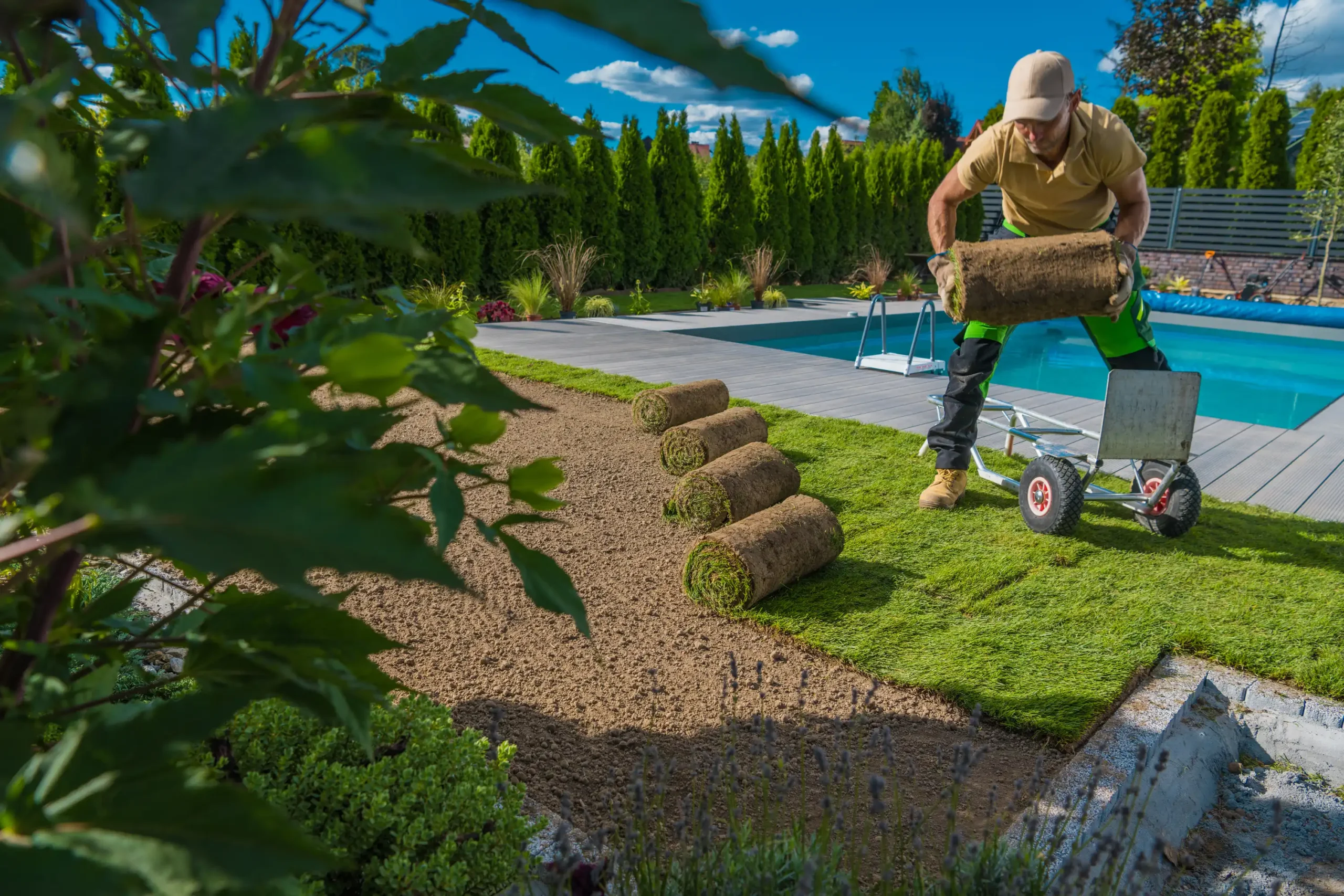
The new lawn can transform the appearance of a home in no time at all. Fresh sod will provide the yard with a clean and finished appearance. However, the roots that lie underneath are just as important as the grass that grows above. If the drainage isn’t adequate, issues may arise before the new lawn has been established.
Water should be directed away from the turf. Excessive moisture in soil can affect healthy rooting of sod. The standing water may also impact the overall look of the yard and make it more difficult to maintain.
That is why it is important to consider drainage before installing new sod. A thorough site inspection can help determine where water accumulates, where soils must be prepared better, etc.
Why Drainage Matters Before New Sod
Sod must have proper soil conditions for a good establishment. Water should not sit for long periods near the surface of the soil.
Water may sit in the yard after rain or regular watering in a yard that drains poorly. This may cause some areas to be wet, and some to be dry at different rates. These imbalances can lead to an inconsistent level of maintenance for the lawn.
It is useful to view how water flows around the property prior to installation. Low areas should be given special attention as they may retain more water than high areas.
A careful preparation process can help to make a better surface for the sod. It also provides homeowners the opportunity to resolve drainage problems before they become a problem for the new lawn.
Common Drainage Problems That Can Affect Sod
Drainage issues aren’t uniform. A few problems are manifested in the form of visible puddles. Others will only become evident with multiple watering or rainfall.
Here are some common conditions that can affect a new lawn:
- Standing water in low areas
- Soil that stays wet for long periods
- Uneven areas where water collects
- Poor water movement across the lawn
- Soil conditions that prevent proper drainage
These problems can lead to uneven moistures throughout the grass. They may also set up spots that are softer than the rest of the lawn.
Early detection of these can make installation more effective.
How Low Areas Can Hold Too Much Water
Pools of water tend to be found in low spots in the yard. If the ground doesn’t move that water away, the lowest points can stay wet.
This may be a problem following heavy rains. Water can puddle in one area, and the rest of the lawn drains well.
Newly planted grass should be in a condition to allow water to move freely. The soil and grade should be carefully evaluated prior to sod installation. This will help determine what you might need to address.
The lawn consistency can be improved with proper site preparation. It can also help to minimize the likelihood of the same areas accumulating water.
Why Soil Preparation Is Important
The type of soil can influence water movement within the lawn. The poorly drained soil can retain excess water at the soil surface.
The first step to good preparation is to be aware of what conditions already exist on the ground. Prior to sod installation, the length and width of the area should be measured.
This step can be used to help pinpoint areas that might require more grading or preparation. It also gives a better idea of what the lawn might do in response to rain and watering.
These conditions can be evaluated by a sod installation Company prior to the project. The aim is to provide an appropriate subsoil environment for establishment of new grass and adequate drainage.
What Happens When Water Does Not Drain Properly?
There may be a number of visible changes in a lawn resulting from poor drainage. It may be wet in some places and have no effect in others. Puddles may also not drain away after the rain.
This can make regular lawn maintenance a challenge. Mowing watery areas might be challenging. Watering can be more erratic since some areas might be already moist.
A lawn must have a balanced environment to allow water to flow through the soil. If drainage is a concern, it can be remedied before installation, in which case it can be completed with improved site conditions..
When Should Drainage Be Checked?
Consider drainage prior to the sod being delivered. Corrections may be more difficult if done after installation.
A site check can be performed in areas where water is pooling or where the ground looks uneven. Drainage patterns may also be more apparent for recent rainfall.
Before installation, homeowners can pay attention to:
- Areas where puddles remain after rain
- Sections that stay soft or wet
- Low spots across the property
- Places where water moves toward the lawn
- Areas that dry much slower than the rest of the yard
These observations can help provide useful information during the preparation stage.
How Professional Preparation Supports Sod Installation
The first step in good sod work is before the sod is laid down. Proper attention will need to be given to the site so the new lawn will have a suitable foundation.
Areas of unevenness and drainage related issues can be identified during the professional preparation process. It can also aid in the identification of areas that the soil may require further preparation prior to installation.
Professional sod installers will inspect the site and concentrate on the factors that could impact the final sod.
This method allows linking every step of the process. Soil preparation is influenced by drainage. Sod is affected by soil preparation. Sod has to be cared for after laying.
Drainage and Long Term Lawn Care
Once the sod has been laid, the work of drainage does not end. This lawn requires regular maintenance and proper irrigation.
Having too much water can be as serious as having too little. Don’t water if the soil is still moist. Rather, the emphasis should be on keeping the moisture level correct and observing the response of the turf.
Also, watch for changes following heavy rain for homeowners. Frequent puddles or areas that are always wet could indicate a drainage problem.
Instead of a minor issue becoming a bigger lawn care problem, early attention can be given to prevent it.
Why Site Specific Planning Makes a Difference
Every yard has its own shape and soil conditions. A solution that works in one area may not suit another.
That is why the installation process should begin with the actual property. The slope, low areas, soil condition, and water movement all deserve attention.
Instead of treating every lawn the same, Green Legacy Landscaping can focus on the conditions present at the property. This creates a more practical approach to sod preparation and installation.
The goal is simple. Prepare the ground properly, support healthy water movement, and give the new lawn a strong place to establish.
Bottom Line
A healthy new lawn starts with more than fresh grass. The ground beneath it needs proper preparation and suitable drainage. Standing water, low areas, uneven ground, and poor water movement can all affect the installation process.
Green Legacy Landscaping takes a site focused approach to sod installation. We assess the conditions, prepare the ground, and help create a better foundation for your new lawn.
If drainage is a concern, our team of sod-installation contractors can help you address the issue before it affects your sod.